How to Spy on Etsy Bestsellers (Without Guessing)
Every successful Etsy seller does product research. But most do it wrong—they browse Etsy, see a listing with lots of reviews, and assume it's a bestseller worth copying. That's guessing, not research.
Real bestseller research means seeing actual sales data, understanding velocity, and knowing which products are trending right now vs. which peaked two years ago.
1. Why Reviews Alone Don't Tell the Full Story
A listing with 5,000 reviews looks impressive. But consider:
- Those reviews might span 6 years. That's ~2 sales/day—not exactly viral.
- The product might have peaked in 2022 and is now declining.
- High-review listings often have massive competition because everyone copies them.
What you actually want to know:
- Recent sales velocity (sales in the last 30 days, not all-time)
- Whether the product is trending up or down
- How saturated the niche is (how many competitors have similar listings)
2. Using Search Data to Find What's Actually Selling
Instead of browsing random shops, start with Etsy search:
- Search a keyword you're considering (e.g., "funny cat shirt")
- Look at the top results—these are what Etsy's algorithm considers high-converting right now
- Check the sales signals: bestseller badges, recent review dates, favorite counts
What to Look For:
- Bestseller badge = Etsy confirms this is a top seller in its category
- Recent reviews (last 7–30 days) = the product is selling NOW, not just historically
- High favorites with few reviews = potential trending product that hasn't fully taken off yet
For a full breakdown of research techniques, read how to do Etsy product research.
3. See Sales Data Directly in Search Results
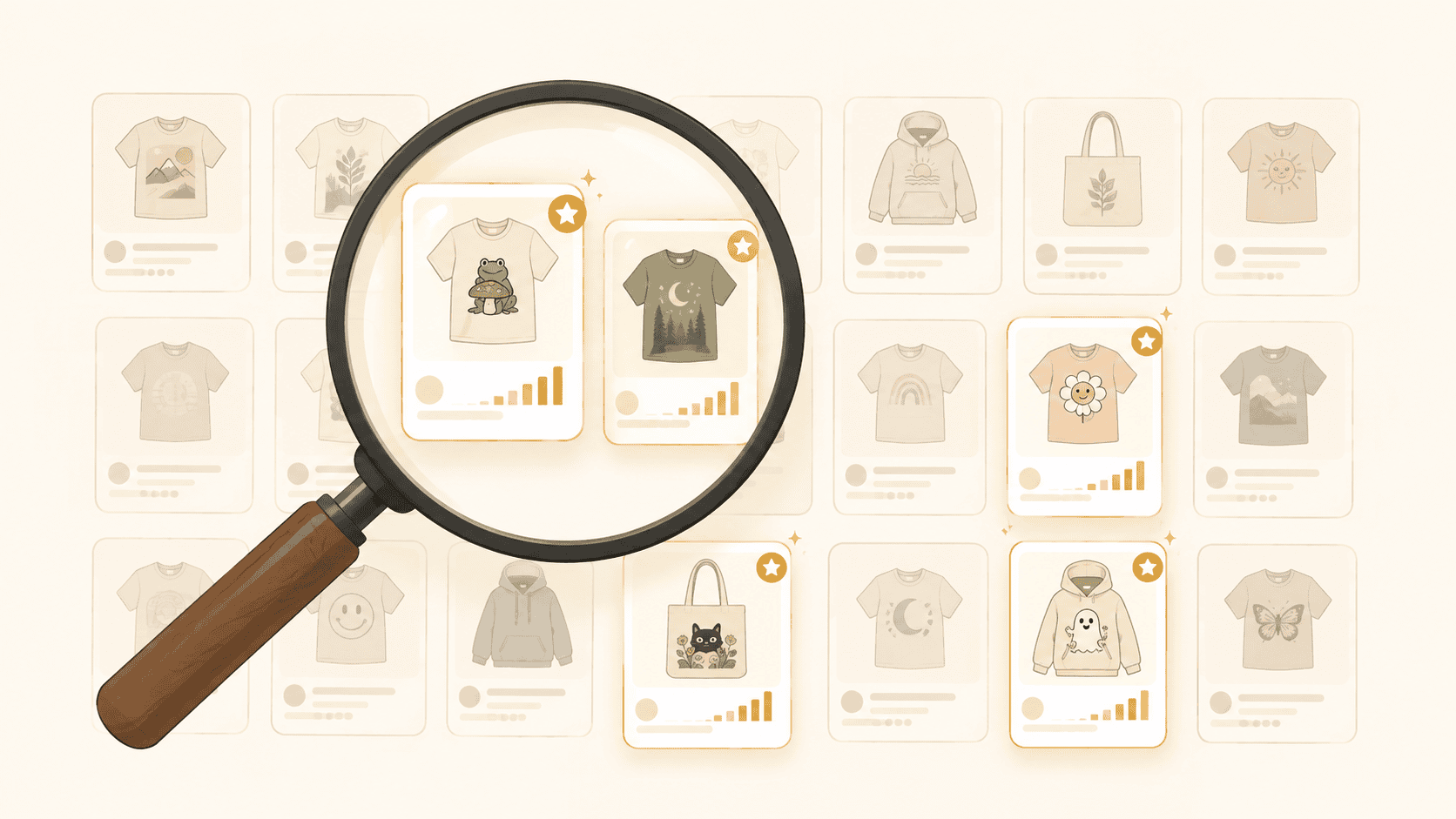
The fastest way to research bestsellers is to see sales data overlaid directly on Etsy search results—without clicking into every single listing.
A browser extension that surfaces this data lets you:
- Scan 50+ listings per page instantly
- Compare sales velocity across competitors
- Spot patterns (which styles/themes/colors sell best in a niche)
- Filter to what's working RIGHT NOW vs. what worked years ago
This turns a 2-hour research session into 15 minutes of scanning.
We built a free Chrome extension that does exactly this. Here's the full guide on how to use it.
4. Analyze Competitors Systematically
Once you've identified bestsellers in your niche, dig deeper:
For each top competitor, note:
- How many listings they have (more listings = more surface area for sales)
- Their pricing strategy (are they premium or competing on price?)
- Their title/tag patterns (what keywords do they target?)
- Their review velocity (how fast are new reviews coming in?)
- Their product variations (which colors/styles get the most reviews?)
Patterns to look for across multiple competitors:
- If 5 out of 10 top sellers use the same keyword structure, that's a proven format
- If the top sellers all price between $20–$28, pricing outside that range is risky
- If every bestseller has 6+ mockup photos, your 2-photo listing won't compete
For a structured approach to this, check out how to analyze Etsy competitors.
5. Validate Before You Create
Before you spend time designing products based on your research:
- Confirm demand: Are there enough searches for this keyword? (Check Etsy's search suggestions—more autocomplete suggestions = more search volume)
- Check saturation: If page 1 is all established sellers with 10,000+ reviews, it's hard to break in. Look for niches where some top results have under 500 reviews.
- Test with 5–10 listings first. Don't create 100 designs in an unproven niche. Launch a small batch, wait 3 weeks, then scale what gets traction.
For a deeper dive on validation, read how to validate an Etsy product idea and how to find profitable niches.
6. The Research → Launch Loop
Here's the system that works repeatedly:
- Research bestsellers in 2–3 potential niches (30 min)
- Pick the niche with best demand-to-competition ratio
- Analyze top 5 competitors' keywords, pricing, and style
- Design 5–10 products inspired by (not copying) what works
- Launch with optimized SEO based on competitor keyword patterns
- Monitor for 3 weeks, then scale winners
Once you've validated a niche, you can scale fast using a bulk upload workflow and spot more bestseller opportunities as you grow.
Bottom Line
Stop guessing which products will sell. Use actual sales data, analyze what's working for competitors right now, and validate before you invest time creating. The sellers who grow fastest aren't more creative—they're better researchers.